


Recommended Axolotl Care

Welcome to our Axolotl Guide
Axolotls (Ambystoma mexicanum) originate from high altitude freshwater lakes in Mexico and are totally fascinating!
They are fully aquatic salamanders that stay in their "baby" form forever, displaying those iconic feathery external gills.
Whilst they have rudimentary lungs, they mainly breath through their gills and a small amount through their skin
With proper care, they can live 10–15+ years and become engaging, long-term pets.
They actually require quite detailed care and as experienced suppliers of healthy aquatic animals, we always recommend thorough preparation before bringing one
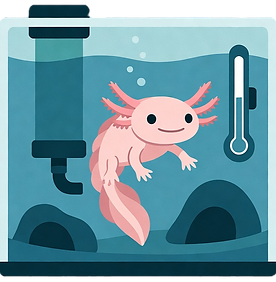
a) Setting up the Tank
Tank Size
75 litres (20 gallons) Minimum
150 litres (40 gallons) or larger is strongly recommended.
For each additional axolotl, add at least 15–20 gallons.
Tank Cycling
Prepare and fully cycle your tank before arrival (see our Tank Cycling Guide for the cycling process).
Stability is everything.
Tank Type
-
Choose long, low tanks (e.g., 36" x 18" footprint) over tall ones. They spend a lot of time at the bottom.
-
No heater required — axolotls are cold-water animals.
-
Use gentle filtration only (sponge filter, baffled canister, or low-flow HOB). Strong currents stress them and can damage gills.
Environment
-
Substrate: Bare bottom, large tile, or fine sand only. Never use gravel or small pebbles — axolotls can ingest them, leading to fatal blockages.
-
Provide multiple hides (ceramic caves, PVC pipes, smooth rocks) Although some low-light plants (live or silk) can provide security, they are often destroyed by axolotls and fin damage is possible.

b) Water Temperature – The Most Critical Factor
Axolotls are highly sensitive to heat. Warm water increases their metabolism, reduces appetite, weakens their immune system, and promotes bacterial/fungal infections.
Cooling Tips
-
Keep the tank in the coolest room of the house.
-
Use aquarium fans for evaporative cooling.
-
In warmer months, employ a reliable chiller or frozen water bottles (in a bag, changed regularly).
-
Monitor with a reliable digital thermometer at all times.

-
Ideal range: 16–18°C (60–64°F)
-
Acceptable range: 15–20°C (59–68°F)
-
Never exceed 24°C (75°F) Above this, stress and disease risk rise sharply.
Ideal Temperature

Excellent water quality is non-negotiable. Axolotls are more sensitive than most fish.
Test regularly with a liquid test kit. Chlorine as found in tapwater is harmful to axolotls and a de-chlorinator should be used
GH measures the amount of calcium and magnesium ions in the water – in other words, how hard or soft your water is (General Hardness)
KH measures the amount of carbonates and bicarbonates in water, which help "buffer" the effect of acids. The higher the KH, the better it can cope with higher acidity.
c) Water Quality


7.4-7.6
0

16-18
o
C
<20
Slightly Alkaline
Ammonia & Nitrite
Temp.
Nitrate
Below 10 ppm best

7-14
GH
dGH
3-8
KH
dKH
Water Changes
Perform 20–30% water changes weekly, or more frequently if nitrates rise. Always dechlorinate new water and match temperature exactly. Adding Indian almond leaves can provide beneficial tannins and mild antibacterial support.
Low to moderate with a consistent 8–12 hour day/night cycle. Avoid bright lights that may stress them as their skin is sensitive to UV-b light, often found in aquarium lighting
Lighting
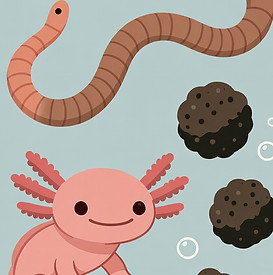
Feeding
Axolotls are carnivores with a strong feeding response.
They will eat live or dead food but prefer moving prey to stimulate them to feed, especially when young.
Best foods (in order of preference):
-
Earthworms or nightcrawlers (staple — highly nutritious)
-
Red wigglers (smaller, good variety)
-
Sinking carnivore/axolotl pellets (e.g., high-quality brands like Hikari or Repashy)
-
Frozen bloodworms, brine shrimp, or blackworms (treats)
-
Occasional Repashy Grub Pie or chopped seafood
Feeding frequency (adjust based on body condition — they should be plump but not overly round):
-
Juveniles (<6–8 months): Daily, small meals
-
Sub-adults to adults: Every other day or 3–4 times per week
-
Offer an amount they can eat in 5–10 minutes. Remove uneaten food promptly to protect water quality.
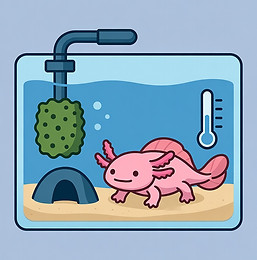
Decorations, Enritchment and Tank Mates
Provide plenty of cover so your axolotl feels secure — they are somewhat shy but will become bolder over time. Smooth decorations only; avoid anything sharp that could tear gills or skin.
Tank mates:
Best kept alone or with other axolotls of similar size. They may nip at fish fins or eat small inverts. Large, peaceful shrimp or snails can sometimes coexist, but monitor closely. Aggressive or fast fish are unsuitable.

Health Monitoring
Observe daily for normal behaviour:
gentle gill movement, occasional walking on the bottom or floating near the surface, good appetite.
Warning signs:
Curled or shrivelled gills
Floating uncontrollably or “bloat”
Loss of appetite
White fluffy patches (fungus) or red sores
Lethargy or clamped gills
Common preventable problems:
Heat stress (most frequent cause of illness)Poor water quality leading to bacterial infections
Impaction from substrate
Obesity from overfeeding
Prevention:
-
Prioritise cool, stable, pristine water.
-
Quarantine new arrivals.
-
Avoid handling unless absolutely necessary (use a soft net if needed).
-
If issues arise, many keepers use fridge-cooling as a short-term aid while improving conditions.
-
Consult an exotic vet experienced with amphibians for serious concerns.
Early action and consistency reward you with a healthy, long-lived axolotl that displays its charming “smile” for years.